Crown versus veneer — the words clinics mix up
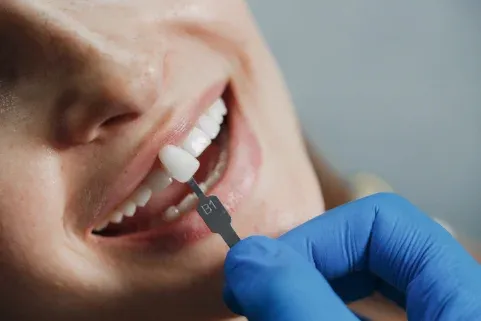
A veneer is a thin shell bonded mainly to the front of a tooth. A crown covers the tooth all the way around. Many full-smile treatments advertised abroad as “veneers” are in fact crowns, because the teeth need covering, not a thin shell. We describe the work as crowns when that is what is fitted, so the estimate matches the laboratory work.
Composite bonding can reshape a small chip or edge without a full crown. An examination decides which approach fits. Asking “veneers or crowns?” without records usually gets an honest answer: we do not know until we see the teeth.
What zirconium is used for
Zirconium (zirconia) crowns are widely used for strength and for covering darker underlying tooth structure. They suit many back teeth and many full-smile cases where durability and a consistent shade matter. Shade matching is done with you present so the laboratory sees the same light you will live with.
A night guard is often part of a large smile-design plan when grinding is a risk. Warranty terms for zirconium work are written with the estimate; they typically require check-ups and sensible use of the guard where one is prescribed.
When E.max is chosen instead
E.max is a lithium-disilicate ceramic valued for how light passes through it. It is often preferred where a single front tooth must blend with natural neighbours, or where translucency is more important than maximum toughness. It is still a crown when it covers the whole tooth — not a marketing synonym for “veneer”.
Some mouths use a mix: zirconium where force is higher, E.max where appearance of a single tooth is critical. That mix is a clinical call after preparation and try-in, not a package name on a flyer.
How a smile-design case is organised
Larger cases may involve temporary teeth, laboratory try-ins, and more than one visit. Root canal treatment on teeth that need it is planned separately when imaging shows it. Hotel and transfers for treatment trips are arranged around the clinical calendar when they are part of your written plan.
UK information meetings can explain the journey. They do not prepare teeth, take X-rays, or lock in a material choice. Assessment stays in Antalya.
- Records and questions before you travel
- Examination, shade and preparation at the clinic
- Laboratory work and try-in until the shape and colour are agreed
- Fit, bite check and aftercare instructions in writing
Conclusion
Zirconium and E.max are different ceramics for different jobs. The right choice depends on the tooth, the bite and the look you need — decided after examination.
Ask us which material is proposed on your written estimate after that examination. This article stays with materials and process only.
This page is for information only. It is not a diagnosis or a treatment plan. Advice from your own examination comes first.
Related